Looking for a home that feels equal parts urban, creative, and convenient? Midtown Atlanta has long drawn buyers who want more than square footage alone. If you are considering Midtown Square and the surrounding Midtown core, this guide will help you understand what modern loft living really looks like here, from building styles to daily lifestyle advantages. Let’s dive in.
What modern loft living means here
In Midtown Atlanta, loft living is not one single thing. The Midtown core includes nearly 7,000 residential units, and many are on or just a few blocks from Peachtree Street with access to MARTA, bus connections, bike lanes, and interstate routes. That scale gives you a broad mix of homes, not just a narrow loft niche.
That matters in Midtown Square because your options often span three categories. You may be comparing adaptive-reuse loft buildings, newer high-rise condos, and smaller boutique mid-rises. In other words, modern loft living here is often a blend of classic loft character and contemporary condo design.
Midtown’s loft market is a hybrid
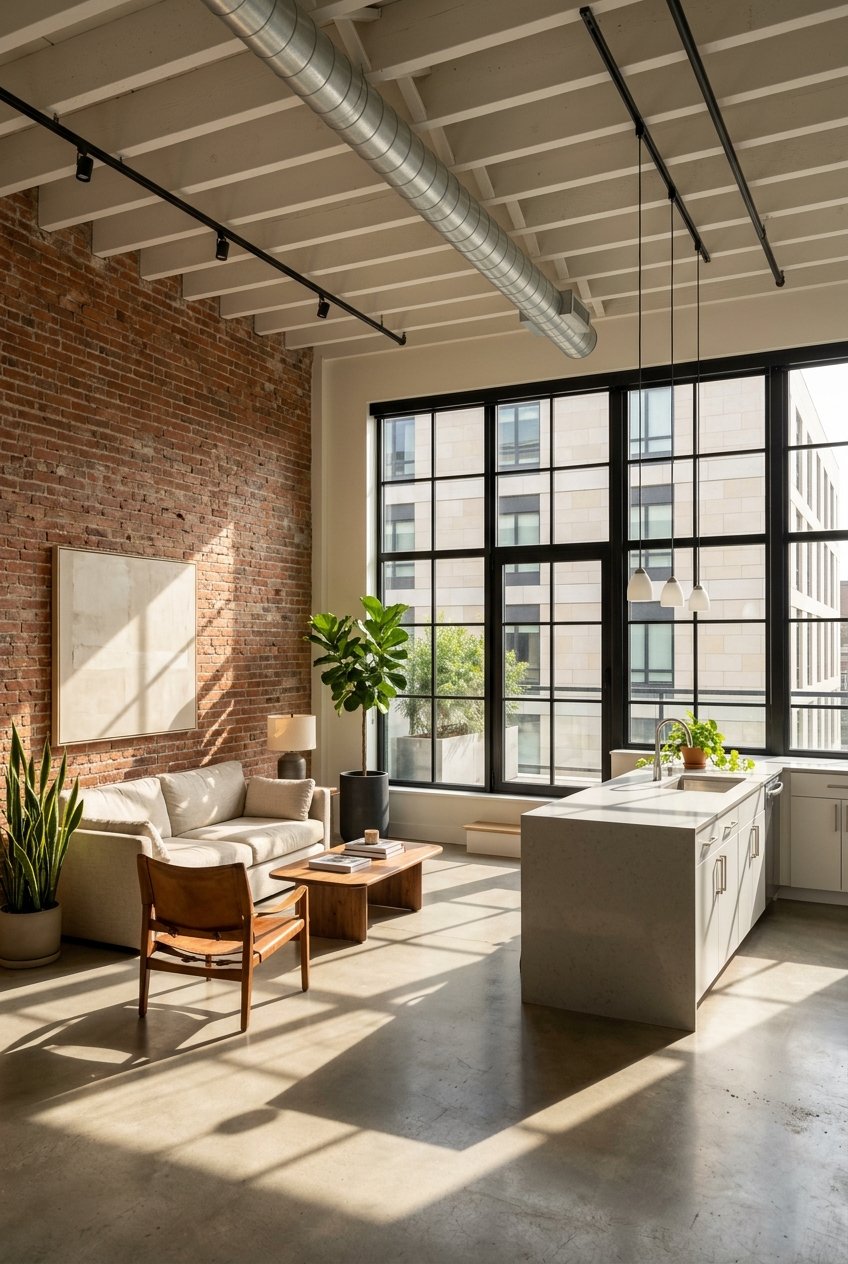
If you picture exposed industrial spaces when you hear the word loft, Midtown may surprise you. Some buildings carry true adaptive-reuse roots, while others deliver a loft-inspired look through open layouts, dramatic windows, and a more vertical, polished design style. The result is a market that feels layered and flexible.
This hybrid character is part of Midtown’s appeal. You can look for older loft pedigree in one building, then tour a glass-forward residence with concierge service in the next. For design-conscious buyers, that range creates more ways to match your home to your lifestyle.
Adaptive-reuse loft options
Midtown does have buildings with established loft lineage. Peachtree Lofts is listed as an adaptive-reuse high-rise condo project from 1995, and Renaissance Lofts is listed as an adaptive-reuse high-rise condo project from 1996. Midtown Alliance also identifies MidCity Lofts, completed in 2003, as a residential condo building in the district.
These properties help anchor the older loft identity in Midtown. If you are drawn to a home with more historic loft associations, these buildings represent an important part of the local housing mix.
Boutique and newer towers
Modern Midtown also includes boutique and glass-forward residences that interpret loft living in a newer way. Aqua Midtown is described as a boutique 25-story high-rise with 84 units, direct elevator access, generous floor plans, and floor-to-ceiling windows. Luxe Midtown is known for wraparound floor-to-ceiling windows and curving architecture.
905 Juniper offers a different scale again. It is an 8-story, 96-unit boutique mid-rise with concierge, pool, whirlpool, clubroom, and fitness center. For some buyers, that smaller building footprint can feel more private while still delivering the convenience of a full-service lifestyle.
Design features buyers notice first
When you tour Midtown loft-style residences, a few patterns tend to stand out right away. Light, volume, and views shape much of the neighborhood’s visual identity. In newer buildings especially, floor-to-ceiling glass and open or generous floor plans appear again and again.
Those features create a clean, modern look that appeals to buyers who care about architecture and presentation. They also reinforce why Midtown often feels loft-inspired rather than purely industrial.
Floor-to-ceiling glass and views
Midtown Alliance repeatedly highlights floor-to-ceiling or wraparound windows in newer residences. That kind of glazing can transform how a home feels throughout the day. If natural light and skyline outlook matter to you, this is one of Midtown’s strongest design themes.
For many buyers, this is the signature look of modern Midtown. Rather than brick-and-beam industrial spaces alone, you are often seeing bright, elevated interiors with a more refined urban edge.
Open plans and generous layouts
Open or generous floor plans are another recurring feature. These layouts can make a residence feel flexible, especially if you want room to work from home, entertain, or simply enjoy a more open flow between living spaces.
In Midtown, that flexibility shows up across product types. It is part of what makes the area attractive whether you prefer an adaptive-reuse building or a newer condo tower.
Boutique scale and privacy
Not every buyer wants the largest tower in the skyline. Boutique buildings such as Aqua Midtown and 905 Juniper offer fewer units than many larger high-rises. That smaller scale can support a quieter, more private residential experience.
For a buyer who values understated luxury, this can be a meaningful advantage. You still get a Midtown address and strong design, but often with a more intimate feel.
Convenience-focused amenities
Many newer Midtown residences are built around convenience as much as design. Concierge desks, clubrooms, fitness centers, pools, and mixed-use ground floors are common features in the district’s newer inventory. These amenities can simplify daily routines while supporting a more lock-and-leave lifestyle.
That combination of design and ease is a big reason Midtown continues to attract buyers who want city living without giving up comfort.
Why Midtown’s arts scene matters
A home in Midtown is tied to more than the building itself. The neighborhood is one of Atlanta’s strongest arts districts, with 25 arts and cultural venues, more than 30 permanent performing arts groups, 22 entertainment facilities, and more than 100 sculptures, murals, and other public art works within a walkable square mile. Midtown also draws more than 6.1 million visitors a year to its cultural institutions.
That density shapes the feel of the neighborhood. Living here can mean your routine includes gallery visits, performances, concerts, and public art as part of everyday city life.
Major cultural anchors nearby
The Woodruff Arts Center is one of Midtown’s most important destinations. Midtown Alliance describes it as the country’s third-largest arts campus, and it is home to the Alliance Theatre, Atlanta Symphony Orchestra, and High Museum of Art.
Other major venues deepen that cultural mix. The Fox Theatre is one of Atlanta’s premier live entertainment venues, while Center Stage adds a three-venue concert complex. Midtown’s arts directory also highlights the Museum of Design Atlanta and the Center for Puppetry Arts.
For buyers considering Midtown Square, this arts access helps explain the neighborhood’s creative identity. It is one reason Midtown feels like a complete urban environment rather than just a collection of condo buildings.
Car-light living is a real advantage
Walkability gets a lot of attention, but Midtown’s appeal goes beyond that word alone. Midtown Alliance says 96% of Midtown’s buildings are within a six-minute walk of a MARTA station. The district also has four rail stations, 26 bus routes, free circulator shuttles, more than 40 linear miles of sidewalk, and 5 miles of bike lanes.
If you want options beyond driving everywhere, Midtown stands out. That kind of connected infrastructure can make day-to-day living feel easier and more efficient.
Transit and connectivity
For residents in Midtown Square and the broader Midtown core, access is one of the strongest selling points. You are in a district where rail, bus, bikes, sidewalks, and major roads all play a role. That gives you flexibility whether your day includes commuting, dining out, or getting across the city for an event.
This is especially valuable in a neighborhood where so much is already close by. Better access often means more freedom in how you plan your routine.
Parks and green space
Midtown also offers strong access to outdoor space. Piedmont Park is a major anchor, and Midtown Station is the closest MARTA station to the park. The Atlanta Botanical Garden sits adjacent to Piedmont Park, adding another major destination nearby.
The Atlanta BeltLine Eastside Trail adds even more reach. The trail runs from the tip of Piedmont Park to Reynoldstown and connects to destinations including Ponce City Market and Krog Street Market. For buyers who want a city home with easy access to green space, this is a meaningful part of Midtown’s lifestyle story.
Dining close to home
Midtown Alliance says the district has more than 150 restaurants, ranging from quick service to fine dining. That gives residents a wide everyday mix, from coffee and casual meals to more destination-style dining.
Colony Square’s Politan Row is a good example of the neighborhood’s newer energy. Its chef-driven food hall and open-air spaces reflect how Midtown blends convenience with a polished, design-aware atmosphere.
Midtown Core versus Midtown Neighborhood
One of the most useful things to understand is that Midtown is not all the same. Midtown Alliance separates the Midtown Core from the Midtown Neighborhood, also referred to as the Historic District. The Core is the condo, loft, and high-rise zone on and around Peachtree, while the east-side residential neighborhood is a distinct early- to mid-20th-century single-family district.
That distinction matters when you are searching in Midtown Square. A buyer may say they want Midtown loft living, but the style, scale, and surroundings can change quickly from one part of Midtown to another.
For most Midtown Square buyers, the clearest framing is this: you are not shopping one monolithic loft market. You are choosing among adaptive-reuse lofts, boutique mid-rises, and larger skyline towers, all within a compact urban district shaped by arts, dining, parks, and transit.
How to choose the right fit
The best Midtown home for you depends on what you want your daily life to feel like. Some buyers prioritize authenticity and seek out adaptive-reuse buildings with established loft lineage. Others prefer newer residences with glass-heavy design, amenities, and a more polished vertical lifestyle.
It helps to narrow your search around a few questions:
- Do you want adaptive-reuse character or contemporary design?
- Would you prefer a boutique building or a larger tower?
- How important are concierge service, fitness space, or a pool?
- Do you want to be closest to transit, dining, arts venues, or green space?
- Are views and natural light at the top of your list?
In a neighborhood with this much variety, clarity matters. A more curated search can save you time and help you focus on the buildings that truly match your priorities.
If you are exploring Midtown Square or weighing loft-style options across Midtown, a design-aware and neighborhood-specific approach can make a real difference. To request a private consultation, connect with Sonny Jones.
FAQs
What does modern loft living in Midtown Atlanta usually look like?
- In Midtown Atlanta, modern loft living usually means a mix of adaptive-reuse loft buildings, newer high-rise condos, and boutique mid-rises, often with open layouts, large windows, and strong access to transit, dining, and arts venues.
Are there true loft buildings near Midtown Square?
- Yes. Midtown includes adaptive-reuse loft buildings such as Peachtree Lofts and Renaissance Lofts, which help define the area’s older loft identity.
What amenities are common in Midtown loft-style residences?
- Common amenities in Midtown loft-style residences include concierge service, clubrooms, fitness centers, pools, and in some buildings, mixed-use ground floors and direct elevator access.
How walkable is Midtown Atlanta for condo and loft owners?
- Midtown Atlanta is highly connected for car-light living, with 96% of buildings within a six-minute walk of a MARTA station, plus rail stations, bus routes, sidewalks, bike lanes, and free circulator shuttles.
What cultural attractions are near Midtown Square?
- Cultural attractions near Midtown Square and the Midtown core include the Woodruff Arts Center, High Museum of Art, Alliance Theatre, Atlanta Symphony Orchestra, Fox Theatre, Center Stage, MODA, and the Center for Puppetry Arts.
What outdoor spaces are accessible from Midtown Atlanta?
- Midtown Atlanta offers access to Piedmont Park, the Atlanta Botanical Garden, and the Atlanta BeltLine Eastside Trail, giving residents convenient options for green space and recreation.
Is Midtown Atlanta only high-rise living?
- No. Midtown includes a range of residential types, from adaptive-reuse lofts to boutique mid-rises and larger high-rise towers, so buyers can choose from several different scales and styles.
Why do buyers choose Midtown Square and the Midtown core?
- Buyers often choose Midtown Square and the Midtown core for the blend of design-forward residences, arts access, dining, transit connectivity, and proximity to parks in a compact urban setting.