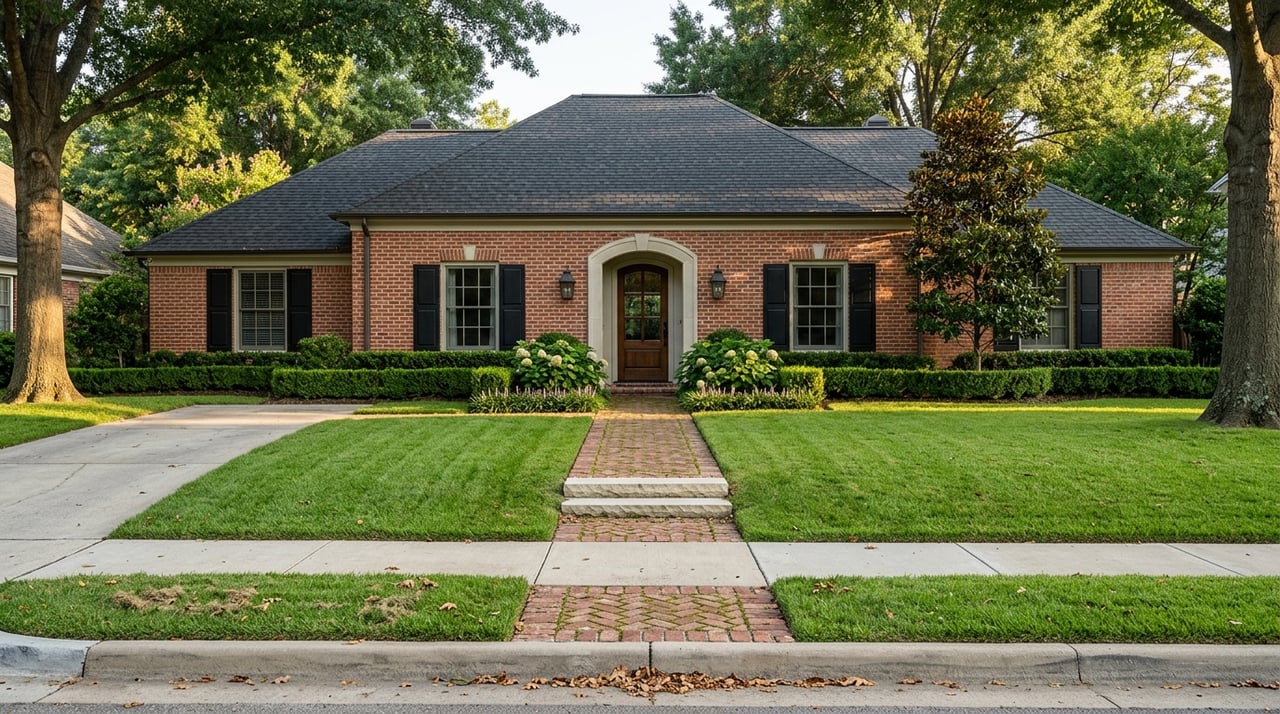
Trying to choose between Brookhaven and Intown Atlanta usually comes down to one big question: what kind of daily life do you want your home to support? You may want walkability, faster access to major roads, a specific housing style, or a neighborhood feel that matches how you actually live. The right answer is not one-size-fits-all, and the tradeoffs become clearer when you compare mobility, housing options, and day-to-day amenities side by side. Let’s dive in.
Brookhaven as the bridge option
Brookhaven works well as a comparison point because it sits between classic Intown neighborhoods and larger northside districts. According to the City of Brookhaven, it is an incorporated city northeast of Atlanta with about 60,000 residents across 12.23 square miles, plus direct access to MARTA, I-85, and GA-400. That combination gives you a blend of city convenience and a smaller-scale framework.
It is also worth clearing up a common point of confusion. Brookhaven is in DeKalb County, not Fulton County. If you are relocating or narrowing your search by county, that detail matters.
What makes Brookhaven especially useful in this comparison is that it is not just one thing. The city has walkable village-style nodes like Dresden Drive, the mixed-use presence of Town Brookhaven, and the Brookhaven City Centre area developing beside the Brookhaven/Oglethorpe MARTA station. In practical terms, it can feel more mixed-use and more connected than many buyers expect.
Commute tradeoffs by neighborhood
Brookhaven: rail and freeway access
Brookhaven’s biggest mobility advantage is flexibility. The Brookhaven/Oglethorpe MARTA station sits on the Gold Line and includes local bus service, Zipcars, and 1,250 parking spaces. Pair that with direct access to I-85 and GA-400, and Brookhaven can work for both transit users and drivers.
If your week includes a mix of office days, airport trips, client meetings, and neighborhood errands, this setup can be appealing. You are not relying on only one mode of travel. That makes Brookhaven a strong fit for buyers who want options.
Virginia-Highland: local street connectivity
Virginia-Highland offers a different mobility story. Its planning documents emphasize alternatives to relying too heavily on a single travel mode, with bike routes along Ponce de Leon Avenue, Monroe Drive, Virginia Avenue, and North Highland Avenue. The neighborhood also has about one mile of BeltLine corridor on its western edge.
That supports a more neighborhood-scaled, street-network experience. If your ideal routine includes walking to local businesses, using trails, and staying close to core Intown destinations, Virginia-Highland may feel more naturally aligned. The tradeoff is that it does not offer Brookhaven’s same rail-plus-freeway mix in one package.
Morningside: walkable feel, car-oriented reality
Morningside-Lenox Park often feels highly walkable at the local level, but its travel profile still leans heavily toward driving. In the neighborhood plan data, 80.74% of workers drove alone, while 2.22% used public transportation, 1.73% walked, and 0.68% bicycled. That is a good reminder that neighborhood character and daily transportation patterns are not always the same thing.
For you, that may be perfectly fine. Many buyers like Morningside because it offers a calm residential setting with neighborhood-scale destinations, even if most errands and commutes still happen by car.
Buckhead: bigger scale, bigger traffic picture
Buckhead shares some of Brookhaven’s northside-access appeal, but on a much larger scale. Planning materials describe an ongoing shift toward a more walkable urban center, supported by PATH400 and improved connectivity. At the same time, Buckhead functions as a large regional district with a broader commercial footprint.
That creates a practical difference. Brookhaven gives you rail and freeway convenience in a smaller-city setting, while Buckhead offers similar access inside a much larger destination area. If you are sensitive to traffic volume and district scale, that distinction matters.
Housing choices and scarcity
Brookhaven offers more product variety
Brookhaven is more housing-diverse than many people assume. The city’s housing plan shows 41.6% detached single-family homes, 9.5% attached one-unit homes, 4.8% two-to-four-unit properties, 18.9% five-to-nineteen-unit buildings, and 24.8% buildings with 20 or more units. Its comprehensive plan also maps a range of housing types in different character areas, including ADUs, duplexes, triplexes, townhouses, fourplexes, and multifamily.
That matters if you are trying to match your purchase to your stage of life. Brookhaven can offer more paths into the market, from condos and townhomes to detached homes, instead of forcing a narrower choice set. For many relocating buyers, that flexibility is a real advantage.
Virginia-Highland leans preservation-minded
Virginia-Highland has a more preservation-focused framework. The neighborhood plan describes it as a predominantly urban single-family neighborhood, with 15% of land area in multifamily and 7% in commercial use. The 2018 plan update also notes ongoing support for retaining single-family zoning in key areas, along with limited vacant lots and pressure on infill sites near the BeltLine.
For you, that often means a more established neighborhood fabric and fewer obvious entry points. Inventory can feel more dependent on resale opportunities, renovation potential, or being patient for the right fit.
Morningside emphasizes compatibility and canopy
Morningside-Lenox Park takes a similar approach, with strong emphasis on keeping new construction compatible with historic scale and tree canopy. Its planning materials frame future growth around broader housing options without losing neighborhood character. Neighborhood materials also highlight concern about large infill homes and redevelopment pressure on mature canopy.
The result is a market that tends to value fit and context. If you are drawn to established streetscapes and a more residential visual rhythm, that may be part of the appeal. But it can also mean fewer easy substitutes when a specific home type is in short supply.
Buckhead brings scale and range
Buckhead is not as tightly defined by one housing form because of its scale. It covers about 28 square miles and includes roughly 45 neighborhoods, according to the Buckhead Coalition. That wider geography can create more variety, but it also means your experience can differ significantly depending on the pocket you choose.
For buyers comparing Brookhaven and Buckhead, this often comes down to how much district scale you want. Brookhaven may feel easier to understand quickly, while Buckhead can offer more breadth across its many subareas.
Daily lifestyle: town centers, parks, and amenities
Brookhaven has more energy than expected
Brookhaven’s mixed-use and civic energy is one of its biggest surprises. Town Brookhaven includes roughly 460,000 square feet of mixed-use space with shops, services, restaurants, and more than 950 apartments. The city also describes Brookhaven City Centre beside MARTA as a civic focal point, while Dresden Drive adds another walkable village-style layer.
That gives Brookhaven a daily rhythm that can feel more active than a typical suburban label suggests. You get places to gather, run errands, and spend time without always needing a large district-scale environment.
Virginia-Highland feels like a neighborhood main street
Virginia-Highland offers a more classic Intown street experience. Its civic association highlights a small business district and neighborhood events such as Porchfest, Winterfest, and a weekly market. The identity here is shaped less by a single major mixed-use node and more by walkability, local retail, and strong neighborhood organization.
If you value older Intown texture and a close-in feel, that can be a major draw. The tradeoff is that it may offer less room and less large-scale amenity infrastructure than bigger districts.
Morningside stays more residential
Morningside has meaningful neighborhood-scale retail and gathering spots, including areas like Morningside Village, but the overall feel remains more residential. Commercial activity supports the neighborhood rather than defining it. That creates a quieter everyday experience.
For some buyers, that is exactly the point. If you want green space, established streets, and a lower-key atmosphere while still staying close to Intown Atlanta, Morningside often lands well.
Buckhead delivers destination-scale amenities
Buckhead stands apart for its size and concentration of regional amenities. The district includes roughly 700 acres of parks, trails, and greenspace, along with destinations such as Lenox Square, Phipps Plaza, The Shops Buckhead Atlanta, and PATH400. Its scale creates a different kind of lifestyle offering than Brookhaven, Virginia-Highland, or Morningside.
It also supports a deeper private-club ecosystem. That is a point of difference if amenities and broader regional reach play a central role in your search.
Parks and recreation feel different in each area
Brookhaven’s park system is especially strong for its size. The city manages 14 parks, including Murphey Candler, identified as the largest park in North DeKalb at 120.60 acres, with fields, tennis, a pool, a lake, playgrounds, and trails. Blackburn Park adds paved trails, sports facilities, and community-garden space, and Brookhaven has three community garden locations.
Morningside brings a different green-space experience. According to MLPA, the neighborhood includes more than 20 parks, preserves, landscaped traffic islands, and greenspaces. That creates a more landscape-forward, canopy-rich feel that can shape the mood of daily life in a very specific way.
Virginia-Highland’s public realm is tied closely to Piedmont Park, the BeltLine, and neighborhood civic life. The neighborhood association notes that residents live within walking distance of shopping, dining, nightlife, parks, and the BeltLine border. If your ideal weekend starts on foot, this may carry a lot of weight.
Buckhead combines large public amenities with broader private-club depth. Brookhaven does have Capital City Club Brookhaven, which adds to its amenity profile, but Buckhead’s club-and-destination ecosystem operates at a larger scale. Your preference here comes down to whether you want neighborhood intimacy or regional reach.
So which choice fits you best?
If you want a middle ground between classic Intown texture and northside convenience, Brookhaven stands out. It offers more housing-form flexibility than Virginia-Highland or Morningside, stronger mixed-use energy than many buyers expect, and a practical combination of MARTA and freeway access. In many ways, it is the bridge choice.
If your priority is deeply local identity, older neighborhood fabric, and walkable Intown character, Virginia-Highland and Morningside may feel more aligned. If you want a larger district with broader commercial scale, more regional destinations, and deeper amenity infrastructure, Buckhead may be the better fit.
The key is not picking the “best” neighborhood in the abstract. It is choosing the one that best matches your pace, priorities, and preferred way of living. For a tailored look at Brookhaven versus Atlanta’s core Intown neighborhoods, request a private consultation with Sonny Jones.
FAQs
Is Brookhaven considered Intown Atlanta?
- Brookhaven is not typically grouped with core Intown neighborhoods like Virginia-Highland or Morningside, but it is close to Atlanta and offers a hybrid of mixed-use convenience, transit access, and neighborhood-scale living.
Is Brookhaven in Fulton County or DeKalb County?
- Brookhaven is in DeKalb County.
What makes Brookhaven different from Virginia-Highland?
- Brookhaven offers a broader mix of housing types and combines MARTA access with direct access to I-85 and GA-400, while Virginia-Highland is more defined by neighborhood walkability, local retail, and a preservation-minded Intown fabric.
What makes Brookhaven different from Morningside?
- Brookhaven generally offers more housing-form flexibility and larger mixed-use nodes, while Morningside is more residential in feel and shaped strongly by green space, established streetscapes, and compatibility with historic scale.
How is Brookhaven different from Buckhead?
- Brookhaven provides rail-plus-freeway convenience in a smaller city setting, while Buckhead operates on a much larger district scale with more regional retail, parks, trails, and club infrastructure.
Does Brookhaven have condos, townhomes, and multifamily housing?
- Yes. Brookhaven’s housing plan shows a mix of detached homes, attached homes, small multifamily, and larger multifamily properties across the city.
Is Brookhaven a good fit for buyers who commute in different ways?
- Brookhaven can be a strong fit if you want flexibility because it pairs the Brookhaven/Oglethorpe MARTA station with access to major roads like I-85 and GA-400.